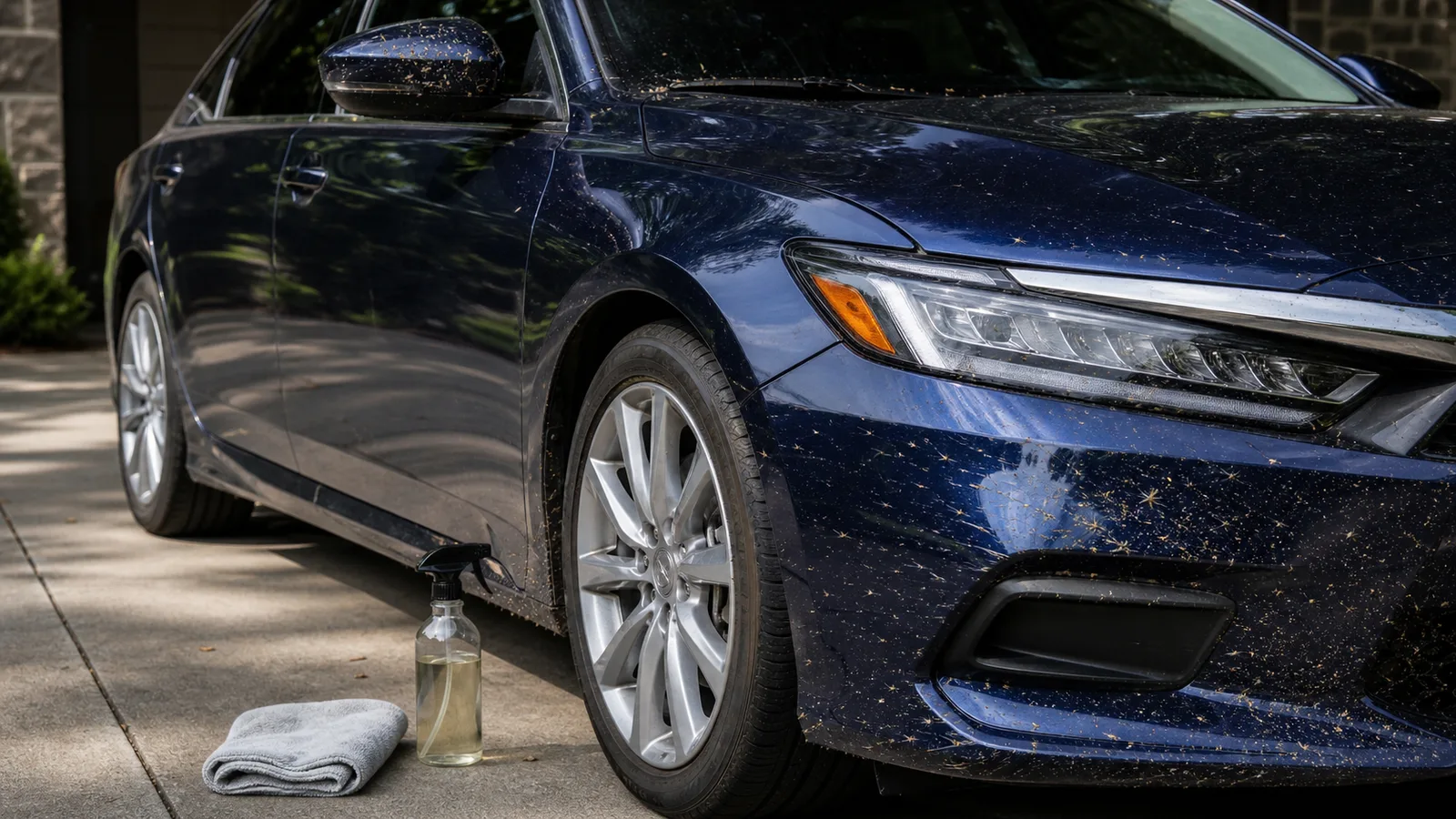
Why bug splatter is more aggressive than ordinary road grime
A front bumper covered in bugs after a summer drive does not look serious at first, but bug residue is different from normal dust or road film. It is concentrated, sticky, and usually spread across the exact parts of the vehicle that take the most heat and airflow.
For Woodbridge-area drivers on I-95, Route 1, or longer evening trips, bug remains often dry onto the bumper, mirror caps, hood edge, and windshield before the vehicle is even parked. The longer that residue sits in the sun, the more likely a rushed cleanup turns into smearing, scratching, or a stubborn outline.
Start with a cool surface and a gentle rinse
If the front end is hot from direct sun or highway heat, let it cool before touching the residue. Warm paint dries towels and cleaners too quickly, shortens your working time, and encourages harder wiping.
Begin with water to rinse off loose grit around the splatter. That first rinse matters because a dry towel on bug-covered paint can drag road dust, grit, and broken shell fragments across the finish.
Soften first, then lift
Once loose grit is gone, use a car-safe cleaner or soapy wash solution to soften the bug remains. Let the product dwell briefly, then lift the softened residue with a clean microfiber towel or wash mitt using light pressure. If anything still feels stuck, repeat the softening step instead of scrubbing harder.
Clean the whole bug path, not only the obvious spot
Bug splatter usually reaches farther than the darkest mark you see at first glance. Check the mirror caps, windshield edge, grille area, front plate bracket, hood lip, and nearby trim so leftover residue is not missed.
After the visible residue is removed, wash that section properly and dry it with a clean towel. This clears away cleaner residue and whatever softened debris was still sitting on the panel.
What usually makes bug cleanup harder than it needs to be
Most avoidable damage comes from impatience. A fast-food napkin, service-station squeegee, or dry scrub at the end of a trip can do more harm than the original bug residue if the surface was already hot and gritty.
- Wiping dry bug splatter with paper towels, napkins, or a dusty rag.
- Cleaning hot paint in direct sun because the mess looks urgent.
- Using heavy pressure on one stubborn spot instead of re-soaking it.
- Ignoring the glass, mirrors, and trim where smaller splatter also dried.
- Letting bug remover or soap dry on the panel before rinsing it away.
Know when a mobile wash or full detail is the practical next step
At-home cleanup is often enough when the residue is fresh and limited to a few spots. A mobile wash or full-detail appointment becomes more useful when the front of the vehicle is heavily covered after repeated highway trips, the residue has baked on for days, or the exterior already needs a broader reset.
ShadowShine currently offers Basic Wash, Full Detail, and Premium Detail packages that can make sense depending on the rest of the vehicle condition. If the problem is mainly the front end and glass, start by comparing the wash-focused options. If the cabin and exterior both need attention, a full-detail appointment may be the more efficient choice.
When booking, mention where the bug residue is concentrated, how long it has been sitting, whether the vehicle was parked in direct sun, and whether any marks remain after cleanup. Those details help more than saying the car just needs a quick wash.
FAQ: common bug-splatter cleanup questions
Can a regular wash remove bug splatter?
Sometimes, especially when the residue is fresh. Older bug buildup usually responds better to a targeted softening step before the wash so you are not dragging stubborn residue across the paint.
What if the bumper looks clean but still feels rough?
That can mean there is still residue bonded to the surface or that the bug remains already affected the finish. Wash the area fully first, then reassess in softer light before assuming more scrubbing is the answer.
When should I stop trying home cleanup and book service?
Book when the residue covers multiple front-end panels, keeps smearing instead of lifting, has baked on through several hot days, or leaves a visible outline after the contamination itself is gone.