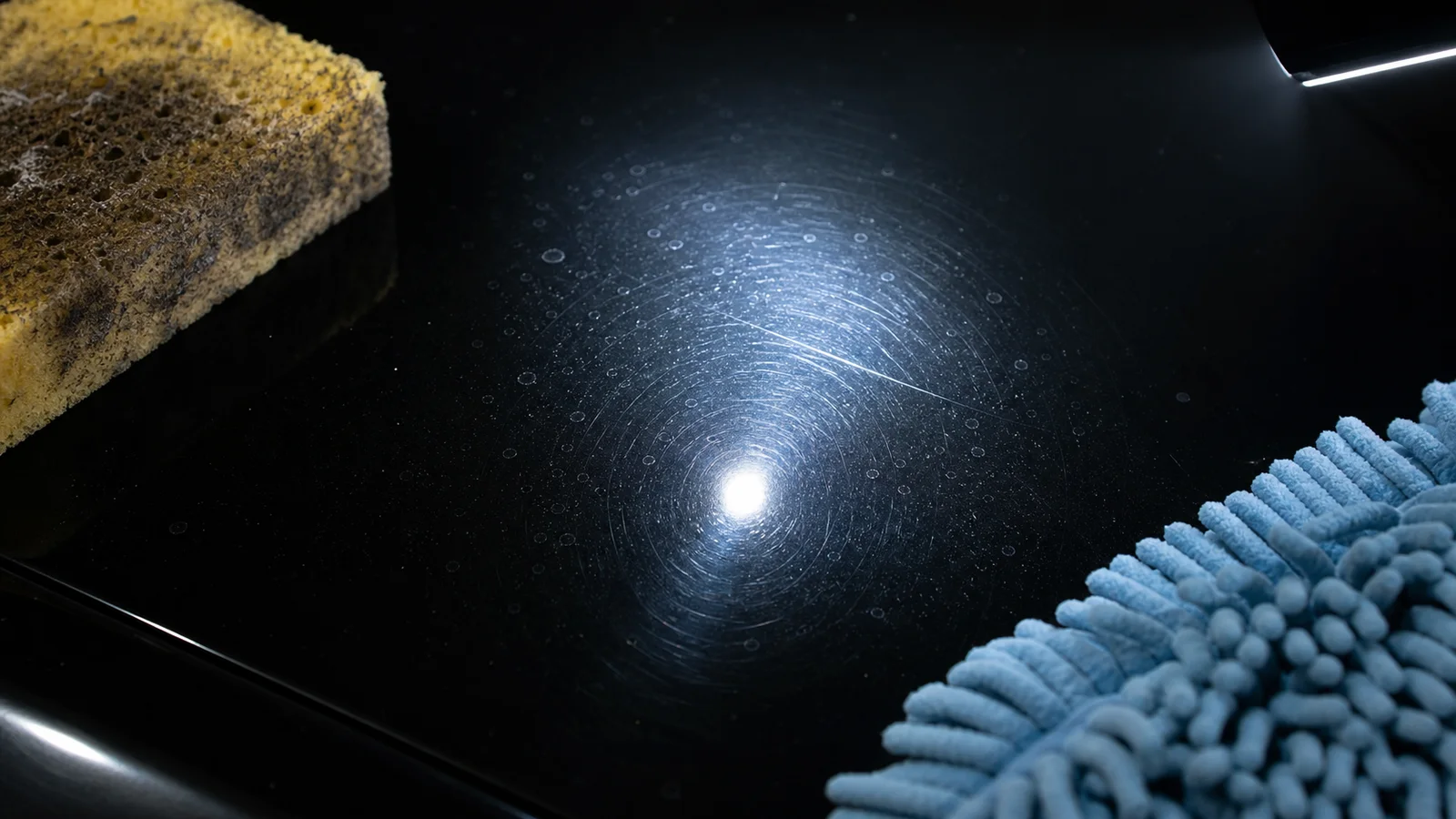
Most wash damage comes from friction and contamination
Clear coat looks smooth, but dirt and grit can mark it when they are dragged across the surface. The safest routine reduces unnecessary contact, uses clean materials, and stops when contamination does not release easily.
The following mistakes are common because they feel faster. Avoiding them is usually easier than trying to improve scratches and staining later.
Mistakes 1–3: moving dirt across the finish
1. Wiping a dusty vehicle while it is dry
A dry towel can drag particles across paint. Wash with adequate lubrication rather than using pressure to make dust disappear.
2. Reusing one dirty towel everywhere
A towel that touched lower panels, wheels, door jambs, or the ground should not return to upper paint. Use multiple clean towels and retire contaminated ones from paint work.
3. Using wheel tools on paint
Wheel and tire tools encounter concentrated grime. Store them separately from paint mitts and drying towels.
Mistakes 4–5: using the wrong conditions or products
4. Washing hot panels in direct sun
Soap and water can dry too quickly, leaving residue and spots. Work on a cool surface in shade when practical.
5. Treating household cleaner as car-care soap
Use products intended for the automotive surface and follow their directions. Stronger is not automatically safer or more effective.
Mistakes 6–7: letting contamination dry
6. Allowing rinse water to air-dry
Minerals remain when water evaporates. Dry the vehicle with a clean, paint-safe towel before spots form.
7. Ignoring bird droppings, insects, or sap
Concentrated contamination can become harder to remove with time and heat. Soften it with an appropriate method and avoid aggressive scraping.
Build a safer wash routine
If a workable wash location, shade, tools, or time are not available, compare professional exterior services. ShadowShine’s current packages list hand-wash steps and mobile appointment requirements for the Woodbridge-area service route.
- Start with cool panels and clean tools.
- Rinse or pre-clean heavy loose contamination before contact washing.
- Work from cleaner upper areas toward dirtier lower panels.
- Use separate tools for wheels and paint.
- Dry deliberately and inspect towels if they touch the ground.
- Stop scrubbing when a spot needs a specialized treatment.