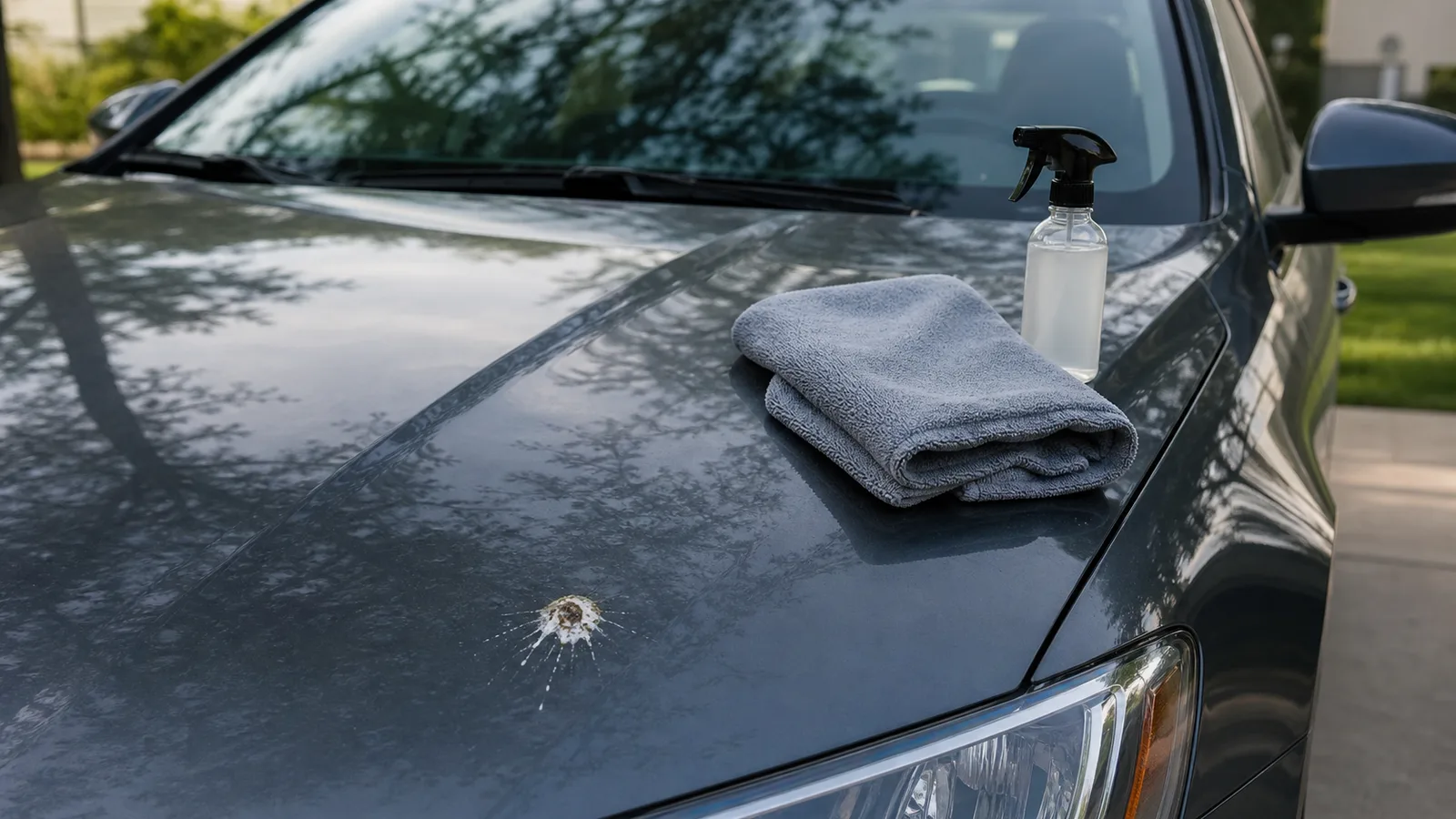
Why bird droppings need a faster response than ordinary dirt
Bird droppings are not just ugly. They concentrate moisture, organic residue, and grit in one small spot, and that combination becomes riskier when the panel sits in summer heat. A quick, careful response usually matters more than using an aggressive product.
For Woodbridge drivers parking at apartments, commuter lots, shopping centers, or tree-lined driveways, the goal is simple: remove the contamination before it bakes harder into the finish or gets rubbed across the paint during a rushed cleanup.
Start on a cool surface and soften the spot first
If the hood, roof, trunk, or glass is hot from direct sun, move into shade or let the panel cool before touching the residue. Heat shortens working time, dries towels faster, and makes it more likely that you will press harder than you should.
Once the surface is cooler, use water or a car-safe cleaner to soften the spot. Let the moisture sit briefly so the residue loosens. A softened mess is much safer to lift than a dry, crusted one.
Lift, do not grind
Use a clean microfiber towel and light pressure to lift the softened residue away. Refold the towel often so loosened grit is not dragged back over the panel. If the spot still resists, repeat the softening step instead of scrubbing harder.
Wash and inspect the area after the contamination is gone
After the visible residue is removed, wash that section with proper car shampoo and dry it with a clean towel. This clears away leftover cleaner, grit, and residue that can otherwise remain on the panel or smear across nearby paint.
Then inspect the finish in softer light. Sometimes the droppings are gone but a dull outline, roughness, or faint stain remains. That does not always mean there is still residue sitting on the paint; sometimes the contamination has already left a mark behind.
What not to do when the spot looks stubborn
Most bird-dropping damage happens during removal, not just from the droppings sitting there. A rushed dry wipe can turn one small contamination spot into light scratching or a larger dull patch.
- Do not wipe a dry dropping with a paper towel, napkin, or dirty rag.
- Do not scrape with fingernails, plastic cards, or razor blades.
- Do not stack random household cleaners on the spot without checking paint compatibility.
- Do not keep rubbing just because the panel looks almost clean.
Know when a mobile detail is the practical next step
A simple at-home cleanup is often enough when the droppings are fresh and isolated. A mobile wash or full-detail appointment becomes more useful when multiple spots have baked across the vehicle, the residue sits high on a roof or glass you cannot reach comfortably, or the exterior already needs broader attention.
ShadowShine currently offers Basic Wash, Full Detail, and Premium Detail packages that can fit exterior contamination depending on the rest of the vehicle condition. If the problem is limited to the outside, compare the wash-focused options first. If the cabin and exterior both need work, a full-detail appointment may save time.
When booking, mention where the spots are located, how long they sat in the sun, whether anything has already been tried, and whether any outline remains after cleanup. Those details are more helpful than saying the vehicle only needs a quick wash.
FAQ: common bird-dropping cleanup questions
Can a regular wash remove bird droppings?
Sometimes, especially when the droppings are fresh and have not dried hard on the panel. Older spots usually respond better to a targeted softening step before the wash so you are not forcing the residue across the paint.
What if the paint still looks dull after the spot is gone?
That can mean the contamination already left etching or staining behind. A routine wash can remove residue, but it cannot guarantee that every paint mark disappears once the finish itself has been affected.
When should I stop trying home cleanup and book service?
Book when the vehicle has multiple baked-on spots, the panel is difficult to reach safely, the cleanup keeps smearing instead of lifting, or the residue is gone but the paint still looks marked and you want a realistic next-step assessment.