Why sand is harder to remove than ordinary dirt
Sand settles into carpet pile, seat seams, cargo tracks, and the edges of rubber mats. When it is damp, it clumps and clings; when it dries, ordinary movement redistributes it. Rubbing aggressively can drive grains deeper or abrade delicate surfaces.
For Triangle drivers returning from the coast, a patient dry-removal process usually works better than immediately adding water or cleaner.
Let damp sand dry before extraction
Park in a ventilated, shaded place and allow damp mats and carpet to dry. Do not close a wet cabin for hours, and do not use high heat that could affect adhesives or interior materials. Remove loose beach gear and inspect for sunscreen, food, or saltwater marks that need separate treatment.
A step-by-step sand removal method
Remove mats without spilling them
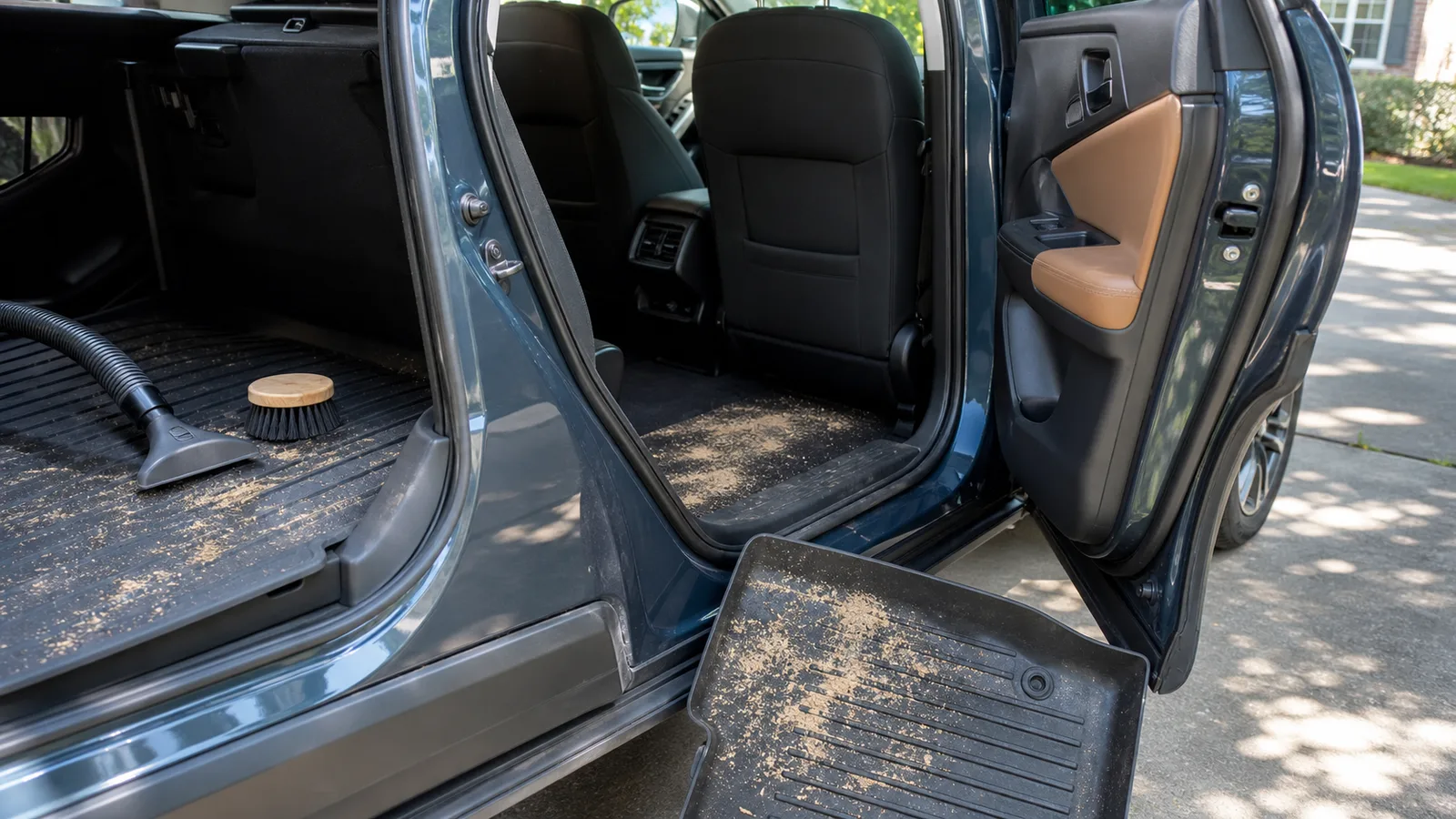
Lift each mat slowly, keeping it as level as possible. Shake or vacuum it outside the vehicle where the released sand will not blow back into the cabin. Follow the manufacturer's care instructions for rubber, carpeted, or specialty liners.
Agitate small sections
Use a soft interior brush or gentle tapping from beneath a removable mat to bring grains upward. Vacuum the loosened sand immediately. Repeat rather than increasing force; harsh wire brushes and aggressive scraping can fuzz carpet fibers.
Finish seams and tracks carefully
Use a crevice tool near seat rails, cargo channels, and upholstery seams without forcing the nozzle against trim. Avoid compressed air around electronics because it can drive sand farther into inaccessible areas. Do not unbolt seats or safety equipment for a routine cleanup.
Do not turn a dry problem into a muddy one
After extraction, address remaining spots according to the affected material. Use minimal moisture and dry the area thoroughly. A second vacuum after fibers relax can capture grains missed during the first pass.
- Do not shampoo before extracting as much dry sand as possible.
- Do not grind a wet towel across sandy plastic or glossy trim.
- Do not use household cleaners without checking material compatibility.
- Do not reinstall damp carpet mats over a wet floor.
Prevent the next beach cleanup
Pack a lidded tote for sandy shoes and toys, carry a small brush for feet, and use properly secured all-weather liners that fit the vehicle. Empty the cargo area soon after returning home. These steps will not eliminate sand, but they keep it concentrated in removable areas.
If sand has reached multiple rows, embedded fabric, or a complex cargo system, an interior detail can save time. Triangle is within ShadowShine's listed mobile service area; disclose sand and any saltwater exposure when requesting service.