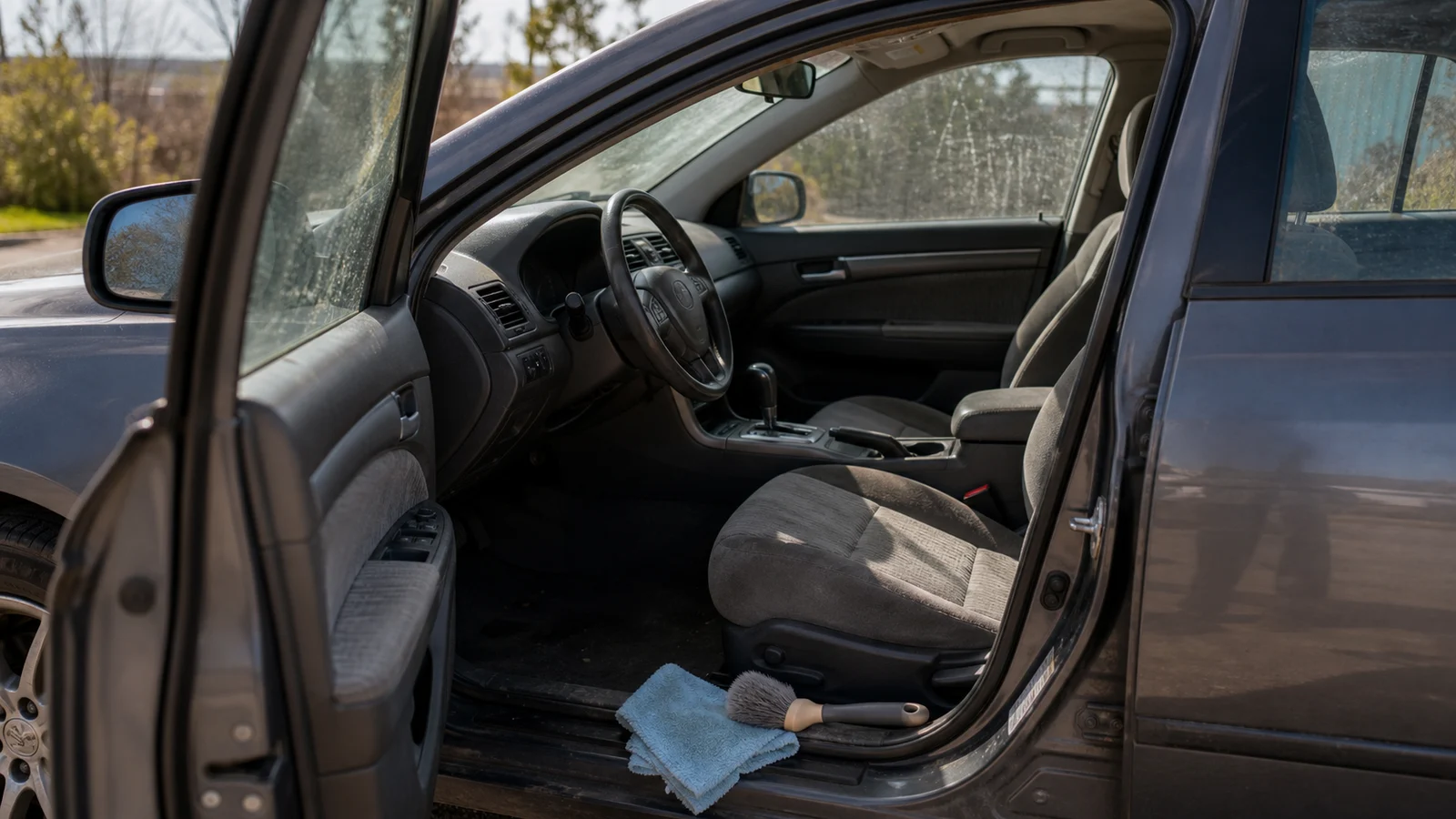
Why smoke odor lingers long after the air clears
Smoke odor usually clings to residue on glass, plastic, vinyl, headliners, seat fabric, carpet, and the cabin ventilation path. That is why a vehicle can still smell stale even after the windows have been open for hours.
Used cars are a common source of this problem, but daily smoking, frequent rideshare use, or an owner trying to cover the odor with fragrance can create the same challenge. The goal is to remove as much residue as practical instead of layering a new scent on top of it.
Start by removing the source and creating airflow
Before you reach for cleaners, remove ash, cigarette butts, packaging, and any trash that is still holding the smell. Take out removable mats and empty storage pockets so hidden debris is not left behind while the visible areas are cleaned.
Then ventilate the vehicle. Open the doors or windows in a safe area and let fresh air move through the cabin while you inspect where the smell is strongest. A vehicle that smells worse near the headliner, vents, or seat backs usually needs more than a quick wipe-down.
Check the cabin air filter too
A neglected cabin air filter can keep reintroducing stale odor through the vents. If the filter is dirty or overdue for replacement, change it according to the vehicle manual or have a mechanic do it. Detailing can help the interior surfaces, but it does not replace basic maintenance items.
Clean the interior in a material-safe order
Work from the least absorbent surfaces to the most absorbent ones. That keeps loosened residue from falling back onto areas you already finished and helps you avoid soaking fabric before the surrounding plastic, glass, and trim are addressed.
1. Hard surfaces and interior glass first
Wipe the dashboard, door panels, console, steering wheel, seat trim, and interior glass with towels and products that are appropriate for those materials. Smoke film often shows up clearly on glass and glossy trim, and removing it first makes the rest of the cabin easier to evaluate.
Spray the towel when practical instead of flooding switches, screens, labels, or perforated surfaces directly. The objective is controlled cleaning, not spreading residue into seams and electronics.
2. Seats, carpet, and floor mats next
Vacuum thoroughly before adding moisture. Fabric seats, carpet, and floor mats can hold odor deep in the fibers, so removing loose ash and grit first matters. Blot and clean in smaller sections rather than saturating the whole cabin at once.
Leather, coated vinyl, cloth, and aftermarket seat materials do not all respond to the same cleaner or brush pressure. Test an inconspicuous area first and stop if a surface becomes tacky, blotchy, or overly wet.
3. Vents, crevices, and final dry-down
Use soft brushes and controlled vacuuming around vents, cupholders, seams, and storage pockets. Finish by drying the vehicle thoroughly. Leaving damp carpet, towels, or mats inside can replace one odor problem with another.
Avoid shortcuts that usually make the problem harder
Smoke odor problems are frustrating because a cabin can look cleaner before it actually smells cleaner. A shortcut that leaves residue on the glass, padding, or ventilation path often leads to the odor returning after the vehicle sits closed in the sun.
- Do not rely on heavy air fresheners to prove the smell is gone.
- Do not use random household degreasers, bleach, or harsh solvents on automotive materials.
- Do not scrub one stained seat aggressively while ignoring the glass, vents, and surrounding trim.
- Do not assume one quick pass can erase years of embedded smoke residue.
Know when a deep interior detail is the practical next step
A routine cleanup may be enough when the smell is recent and the residue is light. A deeper interior service makes more sense when smoke has settled into multiple rows, seat fabric, carpet, cupholders, and headliner edges or when the vehicle was purchased from a regular smoker.
ShadowShine currently offers Basic Interior, Deep Clean Interior, Full Detail, and Premium Detail packages. If the main problem is the cabin, compare the interior-focused options first. If the exterior also needs attention, a full-detail package may be the more efficient appointment.
Be honest about expectations. Some smoke odor can be reduced dramatically, while older saturation in padding, insulation, or ventilation components may linger even after substantial improvement. Accurate condition notes help the booking conversation stay realistic from the start.
FAQ: common smoke-odor questions before booking
Can a regular detail remove cigarette smell from a car?
Sometimes a lighter odor improves with a careful interior cleaning, but a long-standing smell usually needs a deeper interior process and realistic expectations. The stronger and older the residue is, the less helpful a quick cleanup becomes.
Does changing the cabin air filter help?
It can help if the filter has trapped stale odor, but it is only one part of the problem. The seats, carpet, glass, trim, and vents still need attention when smoke residue is present throughout the cabin.
When should I stop trying home remedies and book service?
Book when the odor returns after airing out the vehicle, when the residue affects more than one material, when the headliner or vents seem involved, or when you are preparing a used car for daily driving or resale and want a more thorough reset.